Why Sotogrande Has Become One of the World's Greatest Polo Destinations Where Sport, Business, Luxury and Art Meet

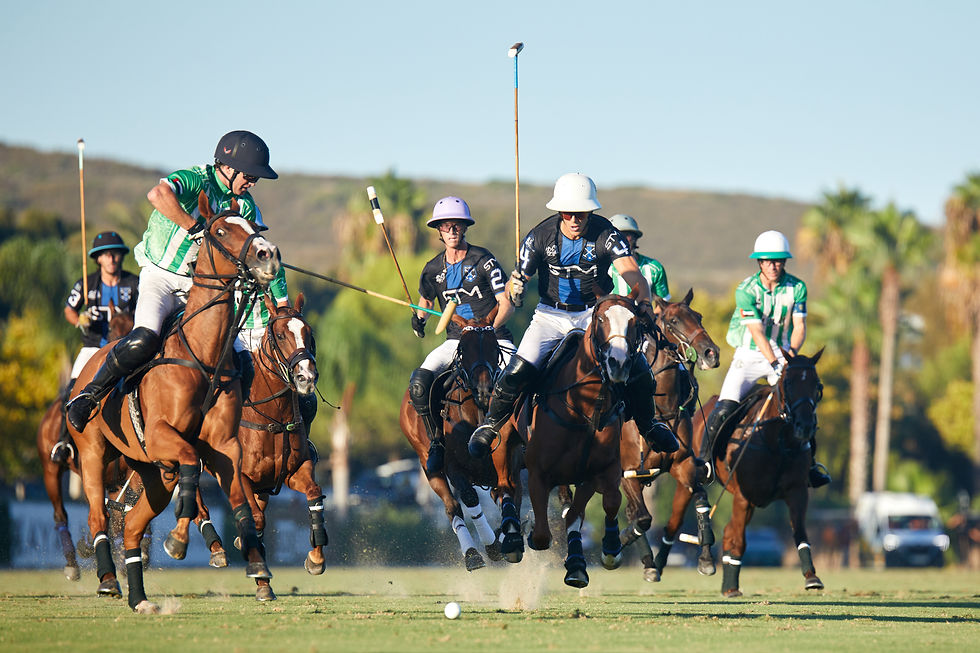
On a summer afternoon in Sotogrande, polo offers a particular kind of theatre. Horses accelerate across immaculate fields, players lean from the saddle with extraordinary precision, and the Mediterranean landscape provides the backdrop.
Around the field, another world unfolds. International families, entrepreneurs, collectors, sportsmen, celebrities and luxury brands gather for hospitality, conversation and the social rituals that surround the game. This convergence has helped establish Sotogrande among Europe's great polo destinations, alongside the historic centres of Argentina and England and the international circuit of Palm Beach.
Located just thirty minutes from Marbella, Sotogrande has developed its own identity within southern Europe's luxury landscape. Founded in the 1960s as an exclusive residential and sporting community, it has grown into a sought-after destination for international buyers looking for privacy, space and an active Mediterranean lifestyle.
Its property market continues to evolve, while prominent sportsmen, celebrities and international families choose Sotogrande as a place to spend part or all of the year. Polo, golf, sailing, equestrian sport, nature and Mediterranean living combine into a lifestyle with genuine appeal across both summer and winter.
A Sport With Two Thousand Years of History
Polo's origins are generally traced to ancient Persia more than two thousand years ago, where early versions of the game were associated with cavalry training. It later spread through Asia, reaching India, where British officers encountered the sport in the nineteenth century and helped establish the foundations of the modern game. From there, polo travelled to Britain, Europe and the Americas.
Its traditions remain central to the modern sport: horsemanship, strategy, speed and the extraordinary partnership between horse and rider. Four players form each team, riding highly trained horses while competing to move a small white ball through the opposing goal. At elite level, players can reach speeds of more than sixty kilometres per hour while controlling their horses, anticipating opponents and striking the ball with remarkable accuracy.
The world's leading players — among them Argentina's Adolfo Cambiaso, widely regarded as the sport's greatest — have helped transform polo into a sophisticated international circuit, with teams, owners, sponsors and spectators travelling between its major centres.


Adolfo Cambiaso
Sotogrande's Polo Identity
Polo has been part of Sotogrande's story almost from the beginning. The first polo field was created in 1965, and the sport gradually became one of the foundations of the destination's international identity.
Today, Ayala Polo Club plays a central role in the summer calendar, attracting leading players and teams from around the world — among them Pablo Mac Donough, who has played alongside Brunei's Princess Azemah. The major tournaments have become an important fixture on the international polo calendar, bringing together elite competition and an international audience.
The setting is a significant part of the appeal. World-class polo exists alongside championship golf courses, a marina, restaurants, luxury villas and extensive green spaces. For the luxury traveller and international homeowner, that combination offers something increasingly valuable: access to a global sporting and social community while retaining a sense of privacy and space.

Brunei polo team, Princess Azemah playing with Top world polo player Pablo Mac Donough
The Business Behind Polo
The modern polo industry extends far beyond the players. Behind every professional team is a network of breeders, trainers, grooms, veterinarians, farriers, horse transport specialists, managers and event professionals. International tournaments require substantial investment and sophisticated logistics, particularly when teams and horses travel between countries.
The sport has also become an attractive platform for luxury companies. Brands can participate through tournament sponsorship, team partnerships, hospitality programmes or long-term relationships with individual players. The most interesting partnerships go deeper than traditional sponsorship ; they connect the expertise of the athlete with the identity, craftsmanship and technology of the brand.
Pablo Mac Donough's long-standing relationship with Richard Mille is one of the most compelling examples. Mac Donough became part of the Richard Mille family more than a decade ago, and the partnership evolved into a collaboration around the technical demands of polo, producing watches developed specifically for the sport's extreme forces: including the RM 053 and RM 53-01. The significance of the partnership lies in its depth: Mac Donough's experience as an elite player contributed directly to the watches' development, turning athlete and brand into genuine collaborators. It is an excellent illustration of where modern polo intersects with luxury ; performance, craftsmanship, innovation and exclusivity coming together around a shared understanding of the sport.

Pablo McDonough wearing Richard Mille watches
The Polo Field as a Networking Platform
Polo has long attracted people from business and international society, and today's tournaments have developed that social dimension even further. Players, owners, sponsors, entrepreneurs, investors and guests meet in relatively intimate settings, where hospitality areas, lunches and private events create space for relationships to develop naturally. A conversation beside the field can lead to a business introduction, a new partnership, or simply a lasting friendship.
Sotogrande's international community makes this particularly powerful. During the polo season, people from across Europe, the Middle East, the Americas and beyond converge around the sport ; among them figures like Emirati businessman Ali Albwardi, founder of Albwardy Investment, whose Dubai polo team has competed alongside players such as Bartolomé Castagnola. The polo field becomes a meeting point for an unusually diverse international network.

Ali Albwardi (Emirati businessman and founder of Albwardy Investment, The Top 100 Arab Family Businesses) celebrates the victory of his Dubai polo team with Top polo player Bartolome Castagnola
Polo Through the Eyes of an Artist
For centuries, polo has inspired painters, sculptors and photographers drawn to its combination of movement, elegance and emotion. The horse has always fascinated artists as a symbol of strength, freedom and beauty; in polo, that fascination intensifies through the relationship between horse and rider — a partnership defined by speed, balance, precision and trust.
Every match creates fleeting moments of visual drama: a horse turning at full gallop, a player reaching from the saddle, flying turf, sudden changes of direction, and the vibrant colours of the teams against the landscape. These moments translate naturally into art. Some artists pursue realism; others use abstraction, expressive brushwork, colour or sculpture to communicate movement and emotion. The subject stays familiar, yet each interpretation can be entirely different.


At Katerina Morgan Art, this philosophy takes shape through a carefully curated collection dedicated to polo and equestrian art. The gallery brings together contemporary artists from around the world, each interpreting the sport through a distinctive artistic language — from expressive paintings and elegant bronze sculptures to modern mixed-media works and monumental commissions. The diversity of styles shows how a single moment on the polo field can inspire countless artistic perspectives, celebrating not only competition but the beauty, power and timeless relationship between horse and rider.


A Place Where Different Worlds Meet
The strength of Sotogrande lies in the ecosystem that has grown around the sport. Polo provides the sporting identity. The international community creates the social network. Luxury hospitality and real estate provide the lifestyle. Golf, sailing and equestrian sport extend that lifestyle throughout the year. Art and culture add another layer to the experience.
This combination also explains Sotogrande's growing appeal within the luxury real estate market. A property here can function as a private Mediterranean retreat while providing access to an established international community and a calendar of sporting and cultural events. Its proximity to Marbella adds another advantage: residents can reach one of southern Europe's best-known luxury destinations in around half an hour, while returning to an environment that feels considerably more private and connected to nature.
For international visitors, that balance is increasingly attractive.
By Katerina Morgan,
Entrepreneur, professional polo photographer, art gallery owner and real estate advisor.



Comments